
Date & Time
April 18, 2026
10:00 a.m. to 1:00 p.m.
Location
Gildersleeve Middle School
1 Minton Drive
Newport News


A Partnership for the Future, Forged by the Past
Igniting Curiosity in Hampton Roads
In 2026, the United States turns 250 — a milestone born from the signing of the Declaration of Independence. Over the last two centuries, many voices and moments have shaped our country. Dive into the beauty, the conflicts, and the bold spirit that make our nation’s story unforgettable.
-
Free Admission and Parking for all families and community members
-
Interactive Exhibits including artifacts, games, and learning
-
Historical Speakers representing stories from all walks of life
-
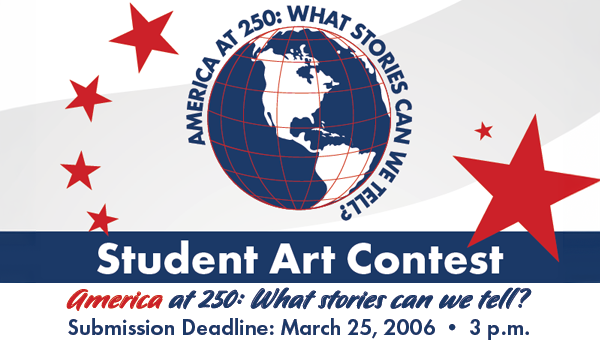
Student Art Contest representing stories told by students
Activities & Schedule
Diverse activities for every age group, from elementary explorers to high school historians!

Activities
Bring the whole family and dive into history at our Social Studies Symposium! You will enjoy:
A Student Art Show
Trivia and Games
Historical Speakers
Exhibitors and More!
This first annual symposium will be an engaging experience designed for NNPS students and families to explore, learn, and celebrate together!

Speaker Schedule
Click the speaker's name for their bio information.
- 10:15 - Michael Cecere: Why did Americans rebel?*
- 10:35 - Jessica Meadows: Point Comfort 1775: Freedom seekers, and local boat pilots in the American Revolution
- 10:55 - Michael Romero: Cesar Tarrant: An Enslaved Pilot's Legacy of Freedom
- 11:15 - Dr. John C. Finn: Legacies of Redlining in Newport News
- 11:35 - Shonda Tabb: Black History and Peninsula Neighborhoods
- 11:55 - Jillian Wagner: Local history and genealogy resources available at Newport News Public Libraries
- 12:15 - Gabrielle Pressley: Here and There: Local Stories in Global History
- 12:35 - Children's Book Reading: Worst of Friends: Thomas Jefferson, John Adams and the True Story of an American Feud*
*Tailored for younger audiences, Pre-K and Elementary
Michael Cecere
 Michael Cecere is a retired history teacher who resides in Williamsburg, Virginia, with his wife, Susan. Originally from Maine, he taught high school and college level American History for thirty years in Fairfax County and Gloucester County, Virginia. The author of twenty-five books and numerous articles on the American Revolution and Revolutionary War, he continues to research and write in retirement. When he is not writing, Mr. Cecere volunteers and works at Colonial Williamsburg, sometimes as a tobacco farmer, other times as a soldier or colonial dancer. He also attends Revolutionary War reenactments and lectures at historic sites and gatherings.
Jessica Meadows
 Jessica Meadows is the Education Programs Manager for Fort Monroe Authority. After teaching in the Virginia Public School system, Jessica turned her career towards informal teaching. With experience in traditional education, living history interpretation, and museum education, she is creating educational program curriculum and opportunities for K-12 classes across the state and beyond, focusing on the interpretation of the unique and diverse history of Fort Monroe.
Michael Romero
 Michael Romero is a third-year Social Studies teacher at Menchville High School currently teaching World History and VA and US Government. He previously spent twelve years as a Historical Interpreter at Colonial Williamsburg. Mr. Romero has a great interest in maritime history of the Age of Sail, and has published numerous articles and book reviews on the subject. This past September, he presented his second paper at the McMullen Naval History Symposium hosted by the U.S. Naval Academy.
Dr. John C. Finn
 Dr. John C. Finn holds a Ph.D. in Geography from Arizona State University and is Associate Professor of Geography and Chair of the Department of Sociology, Social Work, and Anthropology at Christopher Newport University. His research examines the enduring economic, environmental, and health impacts of racial segregation in the United States. For the past eight years, he has directed a mixed-methods project titled Living Apart: Geography of Segregation in the 21st Century, which combines oral history interviews, experimental photographic methods, and interactive mapping to trace how discriminatory 20th-century housing policies produced and sustain landscapes of profound racial, economic, environmental, and health inequality. Dr. Finn has published over 50 articles, book chapters, reports, and op-eds and has delivered more than 150 invited lectures across North America, Latin America, and Europe. Through a sustained practice of public scholarship, Dr. Finn collaborates with journalists, artists, activists, legal teams, and medical researchers to make geographic research accessible and actionable in the pursuit of racial, environmental, and health justice.
Shonda Tabb
 Shonda Tabb is a passionate social studies educator who has been bringing history to life in the classroom since 2007. Often describing herself as a modern-day griot and self-proclaimed neighborhood historian, she is deeply committed to uncovering and illuminating the stories of marginalized people within local communities. Tabb believes history should feel alive, relevant, and connected to everyday people's lives. Through engaging storytelling and meaningful connections to the present, she makes history relatable, thought-provoking, and fun for her students. Her work centers on helping young people see themselves in the past while understanding how history continues to shape the world around them.
Gabrielle Pressley
 Gabrielle Pressley is the School Group Museum Education Coordinator for Newport News Historic Services. Prior to joining the city, she received her master's degree in history from the College of William and Mary. She has also worked as a living history interpreter at Jamestown Settlement, and a high school social studies teacher.


